 Diamond Claw Clinical Team
Why Your Healthy Pet Still Needs to See the Vet: The Complete Guide to Annual Wellness Exams in Sharjah
Here is a question we hear regularly at Diamond Claw Veterinary Clinic in Sharjah: “My pet seems perfectly healthy. Do they really need to come in if nothing is wrong?”
It is a fair and genuinely honest question. And the answer — every time — is yes.
The annual wellness exam is not a visit your pet needs because something is wrong. It is the visit that helps make sure something does not quietly become wrong without you knowing. It is the appointment that allows your veterinarian to detect conditions like kidney disease, early dental disease, heart murmurs, early cancer, and thyroid disorders before they have caused enough damage to create visible symptoms.
By the time most pet owners notice that something is wrong with their pet, the disease has often been progressing for months. The wellness exam is how we find it earlier — when treatment options are wider, outcomes are better, and costs are lower.

Why "Healthy Looking" Does Not Mean "Healthy"
Pets are biologically programmed to mask illness and pain. This instinct is rooted in their evolutionary history: in the wild, an animal that shows weakness becomes a target for predators. Domestic pets retain this instinct deeply, meaning they will often eat, play, and maintain their normal social behaviour even when dealing with significant internal illness or chronic pain.
This is not deception — it is survival biology. But it means that relying on your pet’s outward behaviour as your sole indicator of their health will almost always result in missing things that are genuinely important.
Consider these realities:
- Early kidney disease in cats produces no symptoms until approximately two-thirds of kidney function has already been lost
- Heart murmurs in dogs can be present for months or years before causing any clinical signs
- Dental disease is painful and progressive, but most pets continue eating through significant oral pain
- Early cancer is frequently asymptomatic — many tumours are discovered incidentally during wellness examinations
A wellness exam finds these things. A visit driven only by visible illness usually does not — not until significant damage has already occurred.
What Actually Happens During a Pet Wellness Exam at Diamond Claw
A wellness examination is far more thorough than most owners expect. At Diamond Claw, a comprehensive wellness visit includes:
Complete Physical Examination — Nose to Tail
Your veterinarian systematically evaluates every body system:
Eyes: Clarity, pupil responses, signs of pressure changes, surface changes, and retinal assessment in some cases.
Ears: Presence of infection, inflammation, mite infestation, foreign bodies, or early signs of chronic ear disease — common in floppy-eared breeds and particularly in Sharjah’s humidity.
Mouth and teeth: Assessment of gum colour and health, plaque and tartar level, tooth integrity, and signs of oral infection — the most common condition diagnosed in adult pets and one of the most commonly missed.
Lymph nodes: Palpation of key lymph nodes throughout the body — early enlargement is one of the first signs of infection or lymphoma.
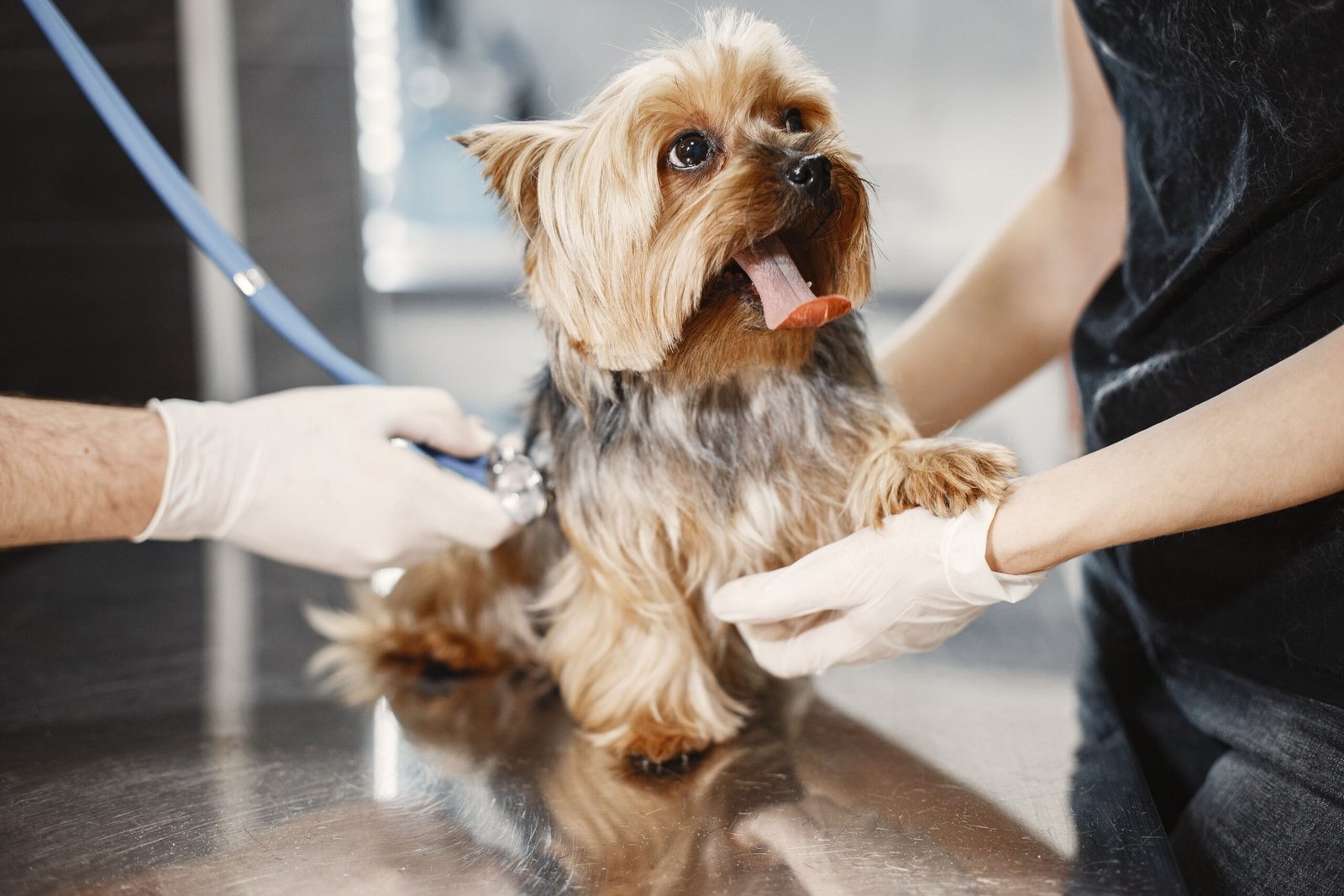
Heart and lungs: Auscultation (listening with a stethoscope) to assess heart rate, rhythm, and the presence of murmurs or abnormal breath sounds.
Abdomen: Gentle palpation to assess organ size, consistency, and the presence of pain, masses, or distension.
Skin and coat: Assessment of coat quality, skin condition, signs of parasites, lumps, lesions, and allergic skin disease — a very common condition in UAE pets.
Musculoskeletal system: Assessment of gait, joint flexibility, muscle mass, and pain responses — particularly important for detecting early arthritis in older pets.
Body weight and body condition score: A precise weight and body condition assessment at every visit allows your vet to identify trends — gradual weight loss or gain that an owner may not notice at home because they see their pet every day.
Neurological brief assessment: Basic reflexes, balance, and responses that may indicate neurological changes.
Recommended Diagnostics at Wellness Visits
Based on your pet’s age, species, breed, and health history, your vet may recommend adding:
Blood work (complete blood count and chemistry panel): Assesses red and white blood cell health, kidney function, liver function, blood sugar, electrolyte balance, and more. This is how kidney disease, liver disease, diabetes, anaemia, and infection are detected before visible symptoms develop.
Urinalysis: Assesses kidney function, hydration, the presence of infection, crystals, or protein — critical for cats in particular, who are highly prone to kidney disease.
Faecal parasite screen: Identifies intestinal parasites that are not always visible and that can be transmitted to human family members.
Blood pressure measurement: High blood pressure (hypertension) is common in older cats with kidney disease or hyperthyroidism, and is entirely without obvious symptoms. It causes progressive damage to the eyes, kidneys, heart, and brain if undetected.
Thyroid testing: Recommended for cats from middle age onward, given the high prevalence of hyperthyroidism in older felines.
Vaccination and Parasite Prevention Review
Every wellness visit includes a review of your pet’s vaccination status — ensuring that core vaccines including the legally required rabies vaccination are current — and an assessment of whether parasite prevention protocols are appropriate and up to date.
Nutrition and Weight Assessment
Your vet will assess your pet’s current diet, feeding amounts, body condition score, and weight trend — recommending adjustments if your pet is underweight, overweight, or if their nutritional needs have changed with age or health status.
A Conversation About What You Have Noticed at Home
You are with your pet every day. You notice things a vet cannot observe in a 20-minute visit. Every wellness exam includes time for you to share anything that has changed, however small it seems — changes in sleep, appetite, drinking, energy, mood, or toileting habits. These details are clinically valuable.
Is Your Pet Due for a Wellness Exam at Diamond Claw Sharjah?
Book your pet’s annual (or biannual) wellness exam today. Our comprehensive wellness visits are designed to give you complete confidence in your pet’s health, catch anything that needs attention early, and keep your pet protected, registered, and thriving in Sharjah.
📞 Call Diamond Claw Veterinary Clinic | 💻 Book online | 📍 Visit us in Sharjah
Don’t wait for something to go wrong to start taking care of what’s right. Book your pet’s wellness exam today.
Why Early Detection Matters: The Cost Comparison
One of the most practical reasons for annual wellness exams is financial, even though it feels counterintuitive. A routine wellness visit — including examination and basic blood work — is almost always significantly less expensive than the treatment of a condition that was missed and allowed to progress.
Managing early kidney disease with prescription diet and supplements is far less costly than emergency hospitalisation for a cat in acute kidney failure. Treating a small lump that has just been identified during a wellness exam is far simpler than managing a cancer that has spread to surrounding tissue after months of undetected growth.
Preventive care pays for itself — in peace of mind, in your pet’s quality of life, and in real financial terms over the lifetime of your pet.
How Often Does My Pet Need a Wellness Exam?
| Pet Type | Recommended Frequency |
|---|---|
| Puppies and kittens (under 1 year) | Every 3–4 weeks during vaccine series |
| Healthy adults (1–7 years) | Once per year |
| Senior pets (7+ years) | Twice per year |
| Pets with chronic conditions | As directed by your vet — often every 3–6 months |
What to Bring to Your Pet’s Wellness Visit
- Any previous vaccination records or health certificates
- A fresh faecal sample (collected within 4–6 hours of the visit if possible) in a clean, sealed container
- A list of any medications, supplements, or treatments your pet is currently receiving
- Notes on any changes you have noticed at home — appetite, water intake, energy, toileting, weight, coat condition
- Any specific concerns or questions you want to address
Coming prepared helps us make the most of your time together and ensures your pet gets the most complete care possible.
A Note on Pet Wellness in Sharjah
Sharjah’s environment creates some specific wellness considerations worth addressing annually:
Heat-related health: Sharjah’s summer temperatures are among the highest in the world. Annual wellness visits allow your vet to assess whether your pet is maintaining healthy body weight and hydration, and to discuss season-appropriate adjustments to exercise, diet, and care.
Allergic skin disease: Pets in the UAE have a higher than average prevalence of environmental allergies, largely due to the dust, heat, and specific plant pollens of the region. Skin and coat assessment is a key component of every wellness visit at Diamond Claw.
Registration compliance: Pet registration in Sharjah requires a current rabies vaccination certificate. Your annual wellness visit is the ideal time to ensure your paperwork is current and your pet’s microchip and registration details are up to date.
Conclusion
The annual wellness exam is the single most important appointment in your pet’s healthcare calendar. It is the visit that finds conditions early, keeps vaccinations current, tracks weight and body condition, assesses dental health, reviews parasite prevention, and gives you a space to discuss everything you have been wondering about since the last visit.
It is not just a box to check. It is the foundation of a long and healthy life for your pet.
And for senior pets — those seven years and above — twice a year is the recommendation, because in a senior pet’s life, six months is a long time for something to change.