
 Diamond Claw Clinical Team
Flea and Tick Prevention for Pets in Sharjah: A Year-Round Guide From Your Vet
One of the most common things we hear from pet owners at Diamond Claw Veterinary Clinic in Sharjah is this: “Do I really need flea and tick prevention? We live in the UAE — it’s too hot and dry for parasites.”
It is a completely understandable assumption. But unfortunately, it is not accurate — and acting on it can leave your pet unprotected against infestations and the diseases that come with them.
Sharjah’s climate does not eliminate the flea and tick problem. In some ways, it creates ideal conditions for it. This guide explains the real parasite risk for pets in the UAE, how infestations happen, and what an effective, vet-recommended prevention plan actually looks like — year-round.

Why Sharjah's Climate Does Not Protect Your Pet From Parasites
Many pet owners associate fleas and ticks with cold-climate countries. The truth is more nuanced. Parasites are not eliminated by heat — they simply adapt.
Fleas thrive in warm environments and can survive year-round in air-conditioned homes, which maintain the cool, stable temperatures they need to complete their life cycle. The flea you see on your pet is only a fraction of the problem. Up to 95% of a flea infestation exists as eggs, larvae, and pupae in carpets, bedding, furniture, and floor crevices — not on the animal. This means that even if your pet rarely goes outside, a single flea hitchhiking in on clothing, a visitor’s bag, or a passing animal can seed your home environment rapidly.
Ticks in the UAE are also a genuine concern. Several tick species are present across the region, and they are found in grassy areas, desert scrubland, parks, pet boarding facilities, and anywhere that wildlife — including stray cats, dogs, and rodents — are present. Ticks are not eliminated by heat and can survive in the UAE environment throughout the year.
Veterinary organisations globally, including the World Association for the Advancement of Veterinary Parasitology, recommend year-round parasite prevention for pets in warm climates precisely because the seasonal “off period” that exists in colder countries simply does not apply. In Sharjah, every month is warm enough for fleas and ticks to remain active.
Why Flea and Tick Prevention Is About More Than Itching
Fleas and ticks are not just uncomfortable — they carry real health risks for your pet and, in some cases, your family.
What Fleas Can Cause
Flea Allergy Dermatitis (FAD): The most common flea-related problem we see clinically. Some pets are hypersensitive to flea saliva, and a single flea bite can trigger an intense allergic reaction involving severe itching, hair loss, hot spots, and skin infections. Pets with FAD do not need a large infestation to suffer — one bite is enough.
Tapeworm infection: Fleas are the intermediate host for Dipylidium caninum, a common tapeworm in dogs and cats. Pets become infected by swallowing a flea during grooming. This is why flea prevention and deworming are closely linked — controlling one is part of controlling the other.
Anaemia in young or small pets: A severe flea infestation in a puppy, kitten, or small pet can cause significant blood loss, leading to anaemia that requires urgent veterinary treatment.
What Ticks Can Cause
Ticks feed by attaching to the skin and consuming blood over hours to days. Beyond the discomfort and localised irritation this causes, ticks transmit pathogens that cause serious illnesses in dogs, including tick-borne diseases that affect the blood cells, lymph nodes, and multiple organ systems.
Tick paralysis — a condition caused by toxins in the saliva of certain tick species — can cause progressive weakness and, in severe cases, respiratory failure. It resolves when the tick is removed, but requires careful handling.
Zoonotic Risk
Some tick-borne diseases can also affect humans. Households with young children, elderly family members, or immunocompromised individuals should be particularly attentive to tick prevention for their pets, as pets can bring ticks into the home environment.
Ask Us About the Best Flea and Tick Prevention for Your Pet
At Diamond Claw Veterinary Clinic in Sharjah, we’ll help you choose the right prevention plan based on your pet’s individual needs and lifestyle. Book a consultation or wellness exam today — it takes one visit to set up a protection plan that lasts all year.
📞 Call Diamond Claw Veterinary Clinic | 💻 Book online | 📍 Visit us in Sharjah
Year-round prevention is the simplest gift you can give your pet.
Types of Flea and Tick Prevention: What Works and What to Know
The good news is that modern veterinary flea and tick prevention products are highly effective and generally safe when used correctly. The main types available include:
Oral Preventatives (Chewable Tablets)
Oral flea and tick preventatives are given by mouth, typically monthly or quarterly depending on the product. They work systemically — meaning the active ingredient circulates in the bloodstream and kills parasites when they bite. They are not washed off by bathing or swimming, making them convenient and reliable for active dogs.
Vet note: Certain oral flea and tick products approved for dogs are toxic to cats. This is not a minor concern — using the wrong product in the wrong species, or allowing a cat to groom a dog who has recently been treated, can cause neurological toxicity in cats. Always use species-specific products under veterinary guidance.
Topical Spot-On Treatments
Applied to the skin at the back of the neck, spot-on treatments are absorbed into the skin or coat and kill or repel parasites on contact. They are applied monthly in most formulations. They are effective but can be temporarily washed off, so bathing should typically be avoided for 48 hours after application.
Tick Collars
Medicated tick collars release active ingredients that repel and kill ticks over extended periods — some provide up to eight months of protection. They are particularly useful as an additional layer of protection for dogs in high-exposure environments.
What Doesn’t Work
Homemade remedies including essential oils, garlic supplements, and herbal sprays are frequently promoted online as “natural” flea and tick prevention. Veterinary evidence does not support their effectiveness, and many are genuinely harmful — garlic is toxic to pets, and certain essential oils cause neurological toxicity in cats. Please do not rely on these in place of evidence-based prevention.
Choosing the Right Product for Your Pet in Sharjah
The right flea and tick prevention product for your pet depends on:
- Species (dog or cat — these are not interchangeable)
- Age and weight — Products are dosed by body weight; using the wrong size can result in under-dosing (ineffective) or overdosing (harmful)
- Health status — Some ingredients interact with medical conditions or other medications
- Lifestyle — A dog that visits grooming salons, dog parks, or boarding facilities has higher exposure risk than one that rarely leaves the apartment
This is why we recommend discussing flea and tick prevention at every wellness visit at Diamond Claw, rather than choosing a product based solely on price or availability at the pet shop. Some products sold over the counter in UAE pet stores are less effective or carry a higher risk of adverse reactions than veterinary-recommended formulations.
Signs Your Pet May Already Have a Flea or Tick Infestation
Signs of fleas:
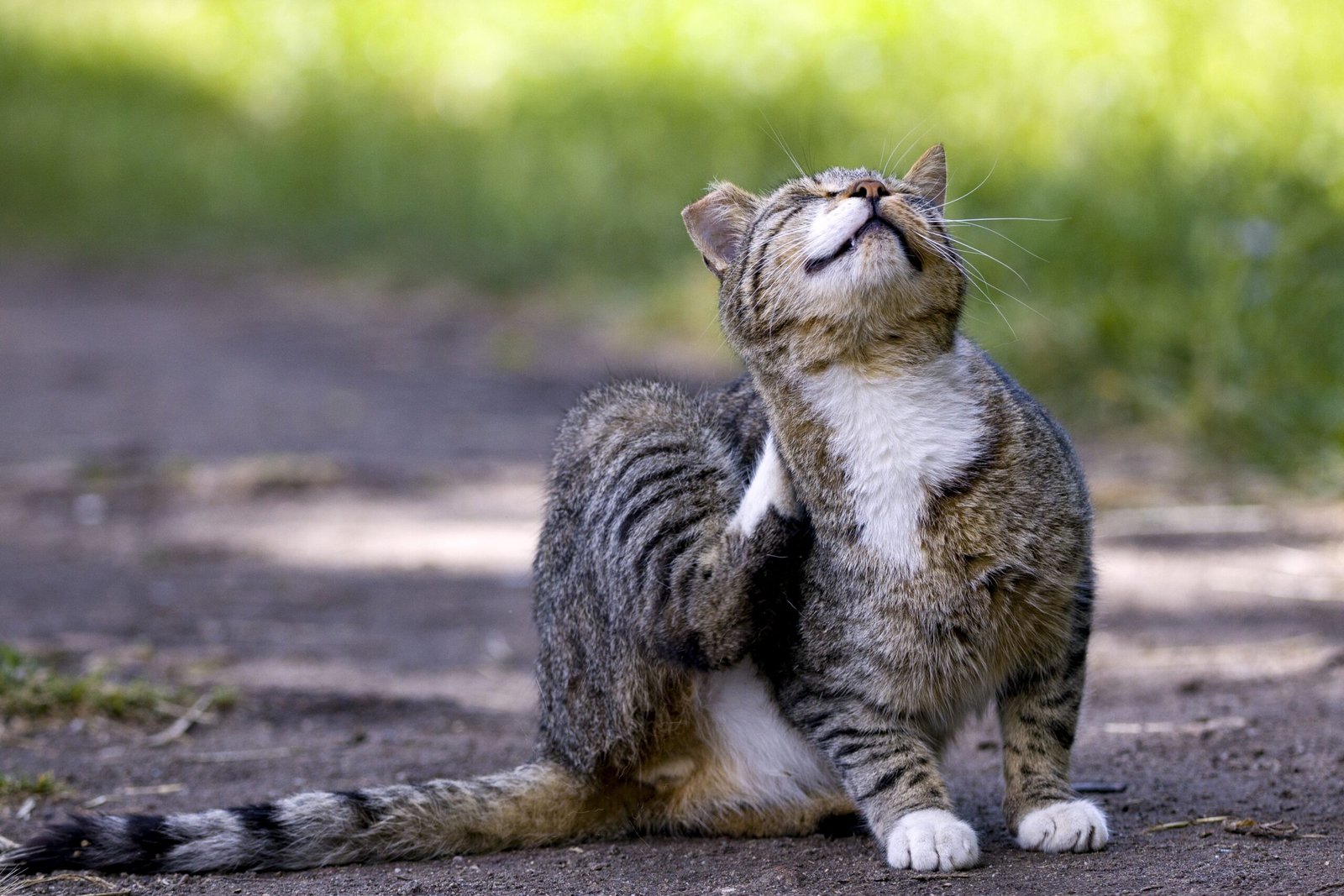
- Persistent scratching, especially around the neck, base of the tail, and abdomen
- Hair loss or patches of irritated, reddened skin
- “Flea dirt” — tiny dark specks in the coat that dissolve into a reddish-brown stain on a damp white paper towel (this is digested blood)
- Restlessness and excessive grooming
- Visible tiny fast-moving insects in the coat (though they are often difficult to spot)
Signs of ticks:
- Small bumps on the skin, particularly in areas where the coat is thinner — ears, between toes, around the face, groin, and armpits
- A tick may appear as a smooth dark growth attached at the skin
If you find a tick on your pet, do not twist, squeeze, or attempt to burn it off. Use fine-tipped tweezers or a proper tick removal tool to grasp the tick as close to the skin as possible and pull straight out with steady, even pressure. Contact Diamond Claw if you are unsure how to remove a tick safely, or if your pet shows signs of illness following a tick attachment.
A Simple Prevention Plan for Pet Owners in Sharjah
| Step | Action | Frequency |
|---|---|---|
| 1 | Use vet-recommended flea and tick prevention product | Monthly or as directed |
| 2 | Check your pet’s coat after outdoor visits | After every outing |
| 3 | Wash pet bedding in hot water | Weekly |
| 4 | Vacuum carpets, rugs, and soft furniture regularly | At least twice weekly |
| 5 | Treat all pets in the household simultaneously | When treating any one pet |
| 6 | Discuss your prevention plan with your vet | At every wellness visit |
Important: If one pet in your home has fleas, all pets must be treated — even those who appear unaffected. Flea eggs in the environment will continue reinfesting untreated animals indefinitely.
Conclusion
Flea and tick prevention is not a seasonal or optional part of pet care in Sharjah — it is a year-round commitment that protects your pet from unnecessary suffering, disease, and the expense of treating a full infestation. The most effective approach combines the right vet-recommended product, consistent application, and environmental control.
Do not wait until you see a problem. Prevention is always faster, simpler, and less costly than treatment.